
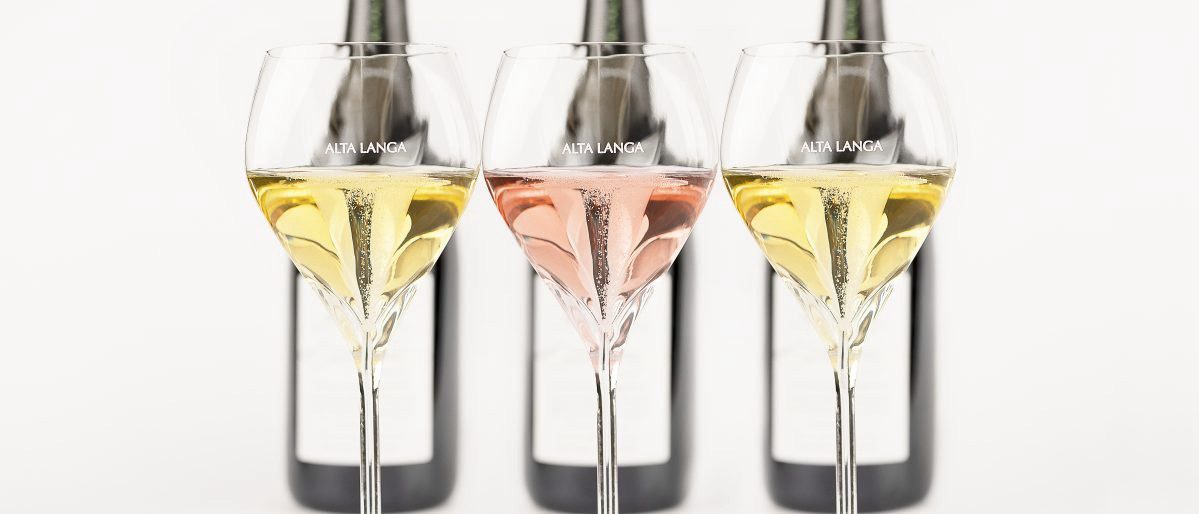
The Italian Soul of Bubbles: Alta Langa, Franciacorta.
Close your eyes and listen to the whisper of fine bubbles rising in your glass — this is metodo classico, Italy’s most elegant expression of time and patience.
In Alta Langa, the vineyards climb high into Piemonte’s hills, brushed by cool Alpine air. Here, Chardonnay and Pinot Noir ripen slowly, preserving a thrilling tension between fruit and freshness. Each sip feels like morning light over the Langhe: crisp green apple, lemon zest, and a breath of mountain stone. The wines rest for years on their lees — longer than many Champagnes — gaining quiet complexity without ever losing their graceful edge.
Alta Langa, from the hills of Piemonte, is a relative newcomer but already a serious contender. Crafted only from Chardonnay and Pinot Noir, it must age at least 30 months on the lees, even longer than non-vintage Champagne. The high altitudes and cooler Alpine breezes lend the wines elegance, tension, and crisp acidity—think citrus zest, green apple, and a fine, chalky minerality. It’s Piemonte’s refined take on sparkling sophistication.


Travel east to Franciacorta, and the mood shifts. The air is softer, the soils glacial and fertile. Franciacorta’s bubbles are more generous — golden fruit, toasted hazelnut, a touch of honeyed brioche. The texture glides across the palate like silk, a reflection of the region’s gentle warmth and tranquil lakeside beauty.
Franciacorta, hailing from Lombardy near Lake Iseo, is more established and often richer in style. With its gentle climate and morainic soils, Franciacorta wines show rounder fruit, creamy textures, and notes of brioche and almond, especially in longer-aged Satèn or Riserva bottlings.


Champagne, the timeless reference point — its cool chalk soils and northern latitude shaping wines of razor precision and electric tension.
Compared to Champagne, both Italian regions share the same metodo classico process—secondary fermentation in bottle, riddling, and disgorgement—but their terroirs speak differently. Champagne tends to emphasize razor-sharp acidity and chalky finesse; Franciacorta leans toward warmth and generosity; and Alta Langa offers a mountain-born precision with a distinctly Italian flair.
Yet to taste Alta Langa and Franciacorta beside Champagne is not to compare, but to listen to different accents of the same language. All three speak of craftsmanship and patience, but the Italian expressions hum with warmth, light, and a certain soulful generosity.
Compared to Champagne, both Italian regions share the same metodo classico process—secondary fermentation in bottle, riddling, and disgorgement—but their terroirs speak differently. Champagne tends to emphasize razor-sharp acidity and chalky finesse; Franciacorta leans toward warmth and generosity; and Alta Langa offers a mountain-born precision with a distinctly Italian flair.
Bubbles, yes — but with very different hearts.
Here we encourage you to try the italian versions both Franciacorta with its history and the newcomer Altalanga are worthy of a place at your table and your celebrations
Leave a Reply